Val d'Isère and Courchevel are the two most prestigious resorts in the French Alps, each with global reputations and very different audiences. For an intermediate or beginner, both deliver world-class skiing — the choice comes down to budget and atmosphere. For an expert, the differences matter more. Here is the head-to-head comparison.
Val d'Isère sits at the eastern end of the Espace Killy ski area, sharing 300 km of linked pistes with Tignes. The summit reaches 3,456m at the Grande Motte glacier, with a lift-served vertical drop of 1,896m. Expert terrain includes the Face de Bellevarde — the 1992 Olympic men's downhill course, with a 38° pitch through the tunnel section — and the Cugnaï couloirs accessed from the top of the Solaise cable car. The off-piste between Val d'Isère and the Italian border (Vallon de la Sache, the Italian side of Tignes) is some of the most respected in the Alps.
Courchevel is part of Les Trois Vallées, the world's largest linked ski area at 600 km of pistes connected to Méribel and Val Thorens. The summit is 3,230m at the Vallée de Pralong off the Vizelle cable car. Expert terrain is concentrated on the Saulire couloirs (Grand and Petit Couloir, both north-facing and steep), the Pyramides off the Suisses chair, and the Creux Noirs sector in the upper Courchevel 1850 area. The Trois Vallées off-piste circuit — including the Couloir de la Saulire and the Coupe du Monde piste — gives experts a full week of distinct terrain without repeating descents.
For pure expert difficulty, Val d'Isère has the edge. The Face de Bellevarde is a true World Cup downhill course, and the off-piste options are more committed. Tignes' Aiguille Percée and the Grande Motte glacier add genuine high-altitude exposure that Courchevel lacks. The terrain feels more wild and alpine.
Courchevel is steep but manicured. The couloirs on Saulire are short — typically 200–400m of fall-line skiing before reconnecting to the groomed network. The mountain is engineered for skiing efficiency, not adventure. Experts find their pulse rises in Val d'Isère; in Courchevel they ski faster and with more confidence on perfect grooming.
Val d'Isère's off-piste options are the resort's main draw for experts. The Tour du Charvet, Vallons de la Sache, and the Italian-border traverses are documented itineraries that locals teach over an entire week. The off-piste runs from Tignes' Grande Motte glacier — particularly the back side toward the Vanoise National Park — give experts a full alpine experience with no resort infrastructure visible.
Courchevel has fewer named off-piste itineraries within its own boundaries, but the connection to Méribel and Val Thorens opens off-piste options across the entire Trois Vallées. The most famous expert run — Couloir de la Saulire — is short but dramatic, with a mandatory 35° entry and a 600m descent. Beyond that, expert off-piste in Courchevel involves longer hikes or guided traverses to Méribel's Mont Vallon area.
Both resorts are high-altitude with reliable snow from December through April. Val d'Isère has the edge for genuinely cold, dry snow at the top of the Solaise and Bellevarde sectors — the Grande Motte glacier provides a guaranteed snow surface even in late spring. Courchevel's higher villages (1850 and 1650) sit at 1,850m and 1,650m respectively, lower than Val d'Isère's 1,850m base, but the upper Saulire and Vizelle terrain holds snow well.
For a late-season trip (March–April), Val d'Isère's glacier guarantees skiing above 3,000m on quality snow. Courchevel relies on the upper bowls, which can become slushy by mid-afternoon in April.
Courchevel 1850 is the most expensive ski resort in Europe by a clear margin. A 6-day Trois Vallées lift pass costs around €380. Hotel rooms in 1850 start at €600/night and reach €5,000+ for the high-end Cheval Blanc and Le K2 Palace. Mountain restaurants charge €40–€80 for lunch. Courchevel 1650 (Moriond) and 1300 (Le Praz) offer significantly cheaper accommodation while sharing the same lift system.
Val d'Isère is also expensive but consistently 30–40% cheaper than Courchevel 1850. A 6-day Espace Killy pass is around €330. Hotel rooms in the village start at €350/night, with the high-end Hotel des Neiges or the Christiania at €1,500/night. Lunch on the mountain averages €25–€40. Tignes (sharing the lift area) offers significantly cheaper accommodation while keeping the same skiing.
Courchevel 1850 is the original glamour ski resort. Seven Michelin-starred restaurants, an altiport that handles private jets, and an audience that includes Russian oligarchs and Middle Eastern royalty. Après-ski in 1850 happens at the Bagatelle and the Tremplin Bar, with prices to match. The atmosphere is exclusive, even for the wealthy. Lower villages — especially 1300 — have a more relaxed, family ski-resort feel.
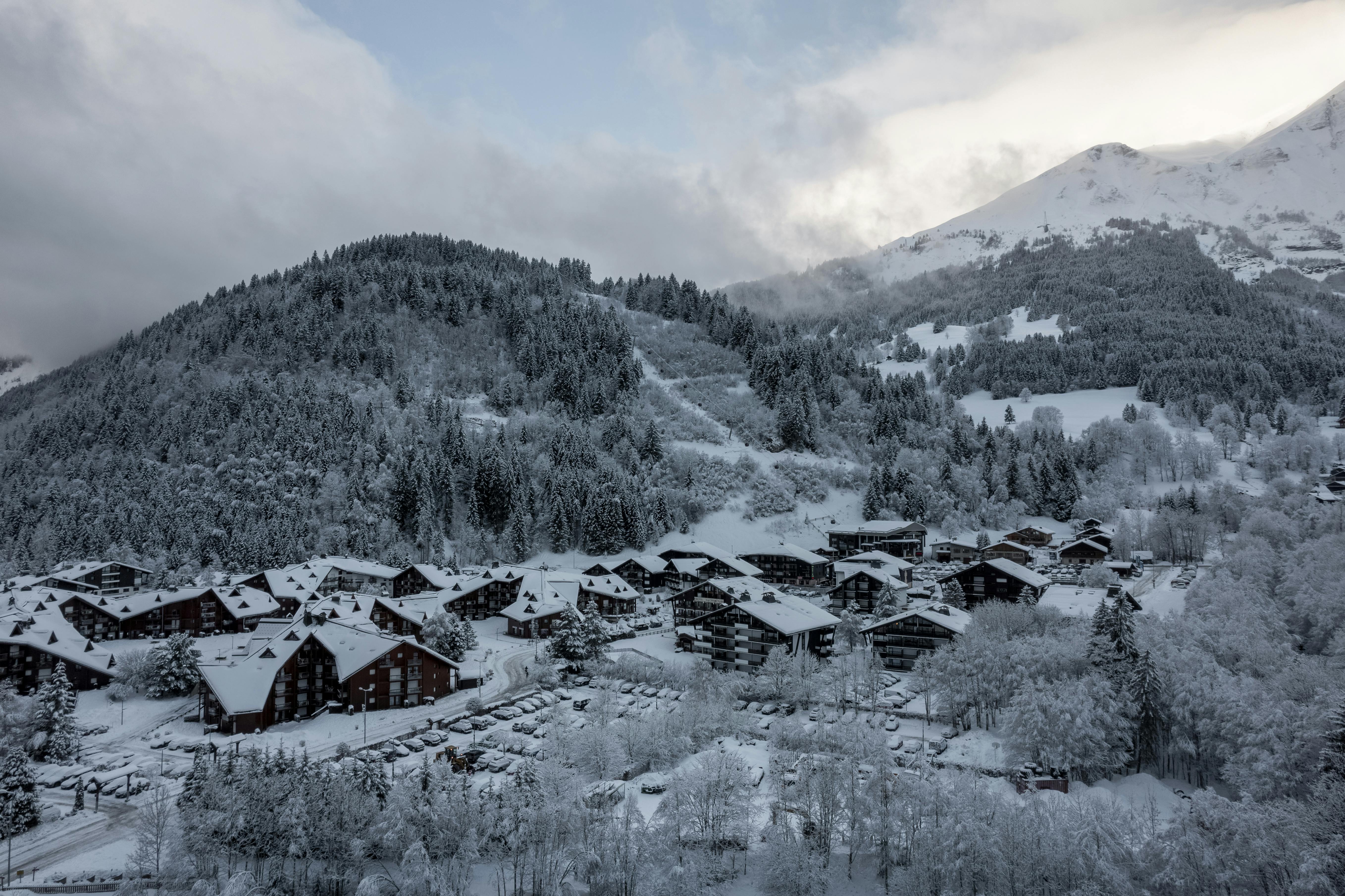
Val d'Isère is also upmarket but with a more traditional ski-village atmosphere. The historic Savoyard architecture (slate roofs, exposed stone) is preserved by strict planning rules. Après happens at La Folie Douce above La Daille — Europe's most famous mountain party venue, with daily 4 pm DJ sets — and Dick's Tea Bar in the village. The vibe is more international ski resort than ultra-luxury fashion show.
If you are an expert who values committed off-piste, alpine wildness, and a more international ski community — choose Val d'Isère. The terrain is more demanding, the glacier guarantees late-season skiing, and the cost is meaningfully lower than Courchevel 1850. Val d'Isère ski rentals can be reserved in advance for early-morning collection.
If you are an expert who prefers immaculate grooming, wants the maximum number of distinct ski days (Trois Vallées has 600 km of piste, vs Espace Killy's 300 km), and your budget can absorb the premium — choose Courchevel. The connectivity to Méribel and Val Thorens means you can ski for ten days without seeing the same run twice.
Val d'Isère has the more difficult and committed expert terrain. The Face de Bellevarde and the off-piste options around Tignes are genuinely demanding. Courchevel's Saulire couloirs are steep but short, and the rest of the resort is less committed.
Yes — typically 30–40% cheaper than Courchevel 1850 for hotels and dining. Lift passes are slightly cheaper too, with the Espace Killy at around €330 for 6 days versus €380 for the Trois Vallées.
No. They are separate ski areas requiring different lift passes. The Espace Killy (Val d'Isère + Tignes) and Trois Vallées (Courchevel + Méribel + Val Thorens) are around 60 km apart by road and not directly linked.
Courchevel 1850 has more high-end restaurants — seven Michelin-starred establishments. Val d'Isère has fewer Michelin stars but excellent traditional Savoyard mountain restaurants like La Bouy and L'Arolay.
For Val d'Isère with the full Espace Killy, a 6-day pass and 6 ski days lets a strong skier cover all major sectors — Bellevarde, Solaise, Le Fornet, and the Tignes side including the Grande Motte glacier. For Courchevel within the Trois Vallées, plan for at least 8 days to cross from Courchevel 1850 to Val Thorens and back via Méribel without rushing. The Trois Vallées is large enough that 10 ski days still yield new runs each day.
Leave a request and we'll send a personal offer for your dates. One window instead of ten tabs — gear, transfer and car sorted and confirmed in advance.