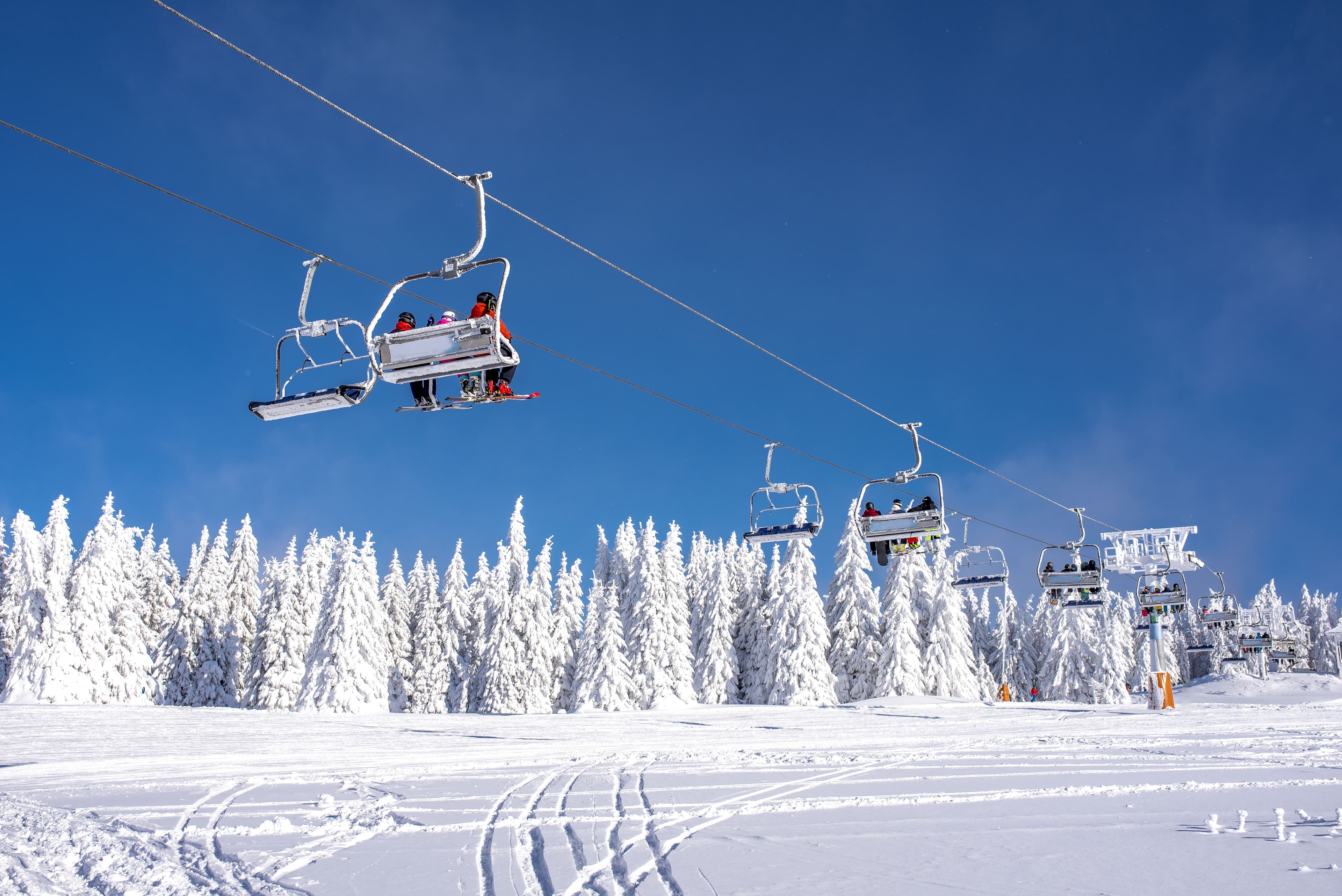
Teleférico moderno a subir uma montanha nevada durante o nascer do sol
Um teleférico é qualquer sistema mecânico concebido para transportar esquiadores ou praticantes de snowboard para cima — de um ponto para outro — para atingir terrenos mais elevados. Em todas as áreas de esqui, os teleféricos são tão essenciais quanto as próprias pistas. Sem eles, esquiar seria um desafio de resistência física em vez de uma atividade recreativa.
As estâncias modernas gastam muito para modernizar os seus sistemas de teleféricos, aumentando tanto a eficiência quanto a satisfação dos hóspedes. Uma rede de teleféricos bem projetada não só expande o terreno e liga diferentes áreas, como também reduz a aglomeração e aumenta o conforto. Decisões estratégicas sobre onde instalar novos teleféricos são fundamentais para manter a competitividade e melhorar a experiência dos hóspedes.
Diferentes teleféricos são projetados para diferentes partes da montanha, dependendo da capacidade, terreno e utilizadores-alvo.
Os teleféricos de superfície, como cordas de reboque, tele-arrastos e tapetes rolantes, são ideais para principiantes e pistas suaves.
Os telecadeiras são os sistemas mais comuns, variando de modelos de fixação fixa a versões de alta velocidade destacáveis que movem milhares de esquiadores por hora.
As gôndolas e os teleféricos transportam grandes grupos em cabines fechadas e muitas vezes ligam estâncias ou atravessam vales profundos.
Cada sistema serve um propósito único dentro do ecossistema da estância. Quando um novo teleférico é instalado, não só melhora a conveniência, como muitas vezes transforma a forma como os esquiadores navegam por toda a montanha.
A adição de um novo teleférico pode remodelar toda uma estância. O acesso melhorado abre novos terrenos, reduz os tempos de espera e atrai mais visitantes. Os teleféricos modernos são mais silenciosos, rápidos e eficientes em termos energéticos, proporcionando uma melhor experiência tanto para esquiadores como para operadores.
Quando uma estância investe numa nova instalação, é mais do que apenas uma modernização — é uma declaração de progresso. A época de esqui torna-se mais agradável, pois filas mais curtas e viagens mais suaves permitem que os hóspedes se concentrem em esquiar em vez de esperar.
Apesar da sua complexidade mecânica, os teleféricos estão entre as formas de transporte mais seguras. Estudos mostram que incidentes graves são extremamente raros, sendo a maioria dos acidentes causada pelo comportamento do passageiro em vez de falha mecânica.
Os passageiros desempenham um papel importante na segurança: baixe sempre a barra de segurança, permaneça sentado e siga as instruções do operador. As estâncias realizam inspeções e manutenção regulares para garantir que os sistemas atendem aos rigorosos padrões de segurança. Muitos "teleféricos usados" são realocados ou remodelados para prolongar a sua vida útil, mantendo o desempenho máximo.
Construir ou modernizar um teleférico envolve um planeamento complexo. As estâncias devem avaliar o terreno, a capacidade, as necessidades de energia e a integração com outros sistemas. Fatores como a exposição ao vento, as condições de neve e o impacto ambiental influenciam onde os teleféricos são construídos e como operam.
Para os visitantes, compreender o layout e o horário de funcionamento dos teleféricos é igualmente importante. Saber quais teleféricos servem quais pistas ajuda a maximizar o seu tempo e evitar ficar preso na montanha após o encerramento. O design estratégico do teleférico ajuda-o a gastar muito menos tempo à espera e mais tempo a esquiar.
A tecnologia de teleféricos está a evoluir rapidamente. As estâncias agora instalam telecadeiras de seis e oito lugares de alta velocidade, gôndolas panorâmicas e sistemas híbridos que combinam recursos de telecadeira e teleférico. Esses sistemas aumentam a capacidade, reduzem as filas e aumentam o conforto durante toda época de esqui.
A tecnologia inteligente está a tornar-se padrão: passes sem contato, monitorização de filas em tempo real e controles de velocidade adaptativos que se ajustam às condições climáticas, tudo melhora a experiência do hóspede. Além disso, a sustentabilidade é um foco crescente — algumas estâncias realocam teleféricos existentes para reduzir o desperdício e os custos.
Com padrões climáticos em mudança, os novos designs também enfatizam a resistência às intempéries e a adaptabilidade. As estâncias agora planeiam novos teleféricos que podem operar com eficiência em vários níveis de neve e condições de temperatura.
A qualidade da sua experiência com o teleférico define quanto tempo realmente passa a esquiar. Teleféricos eficientes e bem localizados significam esperas mais curtas e mais tempo nas pistas. Em grandes áreas de esqui, redes de teleféricos conectadas facilitam a exploração de diferentes secções sem perder tempo em trânsito.
A gestão de multidões também depende do layout do teleférico. Durante os períodos de férias de pico, um design inteligente — como teleféricos paralelos e opções expressas — mantém o fluxo suave. Para famílias, pistas suaves e teleféricos fáceis de usar proporcionam acessibilidade e conforto.
O ritmo do seu dia na montanha — a sua primeira subida, a sua última descida antes do pôr do sol — é todo ditado pelo horário do teleférico. Conhecer o sistema ajuda-o a planear melhor e a aproveitar cada momento.
À medida que as estâncias de esqui modernizam, os teleféricos estão a evoluir para mais do que apenas transporte — são uma experiência. Assentos aquecidos, proteções contra intempéries, vistas panorâmicas e conectividade digital estão a tornar-se padrão. Essas inovações transformam a forma como as pessoas se movem pela montanha e tornam o esqui mais acessível do que nunca.
A nova era dos teleféricos concentra-se no conforto, sustentabilidade e integração tecnológica. As estâncias estão a investir em sistemas que melhoram tanto o desempenho quanto a responsabilidade ambiental, garantindo que as futuras gerações possam desfrutar de acesso seguro e eficiente às montanhas.
O teleférico é o coração da estância de esqui moderna — uma maravilha da engenharia que torna possível a recreação na montanha. Ele conecta as pessoas à aventura, une zonas de terreno separadas e define o ritmo de cada dia de esqui. Com investimentos contínuos em novos teleféricos, sistemas inteligentes e sustentabilidade, o futuro do esqui promete maior conforto, segurança e acessibilidade.
Compreender como os teleféricos funcionam ajuda cada esquiador a apreciar o esforço por trás da experiência na montanha — e garante que aproveite ao máximo a sua época de esqui.
