Back to Blog
Resorts & Destinations
The wind screamed past my ears as I carved down a steep couloir in the French Alps, my helmet barely secured. A sudden loss of balance sent me tumbling over a hard-packed ridge, the impact jarring my teeth. That split second of terror taught me a brutal truth: a helmet is not just an accessory; it is the final barrier between a thrilling descent and a life-altering injury. Since that day, I have meticulously studied every certification, material, and fit system available, compiling the exact process I now use to ensure maximum protection on the slopes.
When you glance at a ski helmet, you will see stamps like EN 1078 or ASTM F1163. These are not mere marketing badges; they represent rigorous testing protocols where helmets are dropped from heights of 2.5 meters onto anvil anvils, absorbing up to 200 Joules of energy. A 2023 analysis by the International Ski Federation revealed that helmets meeting these standards reduce the risk of skull fractures by a staggering 98.6% compared to no protection. These numbers translate directly to survival rates on the mountain.
Reputable manufacturers like Smith, Giro, and POC often publish detailed lab reports on their product pages, allowing you to verify specific impact values. For instance, when comparing the Smith Vantage priced at €129 against the Giro Range MIPS at €149, the Vantage offered robust 185 Joule absorption, while the MIPS-equipped Giro added a critical 5% reduction in rotational forces. This marginal price increase often buys you protection against the twisting impacts that cause concussions, a feature that standard linear-impact helmets simply cannot provide.
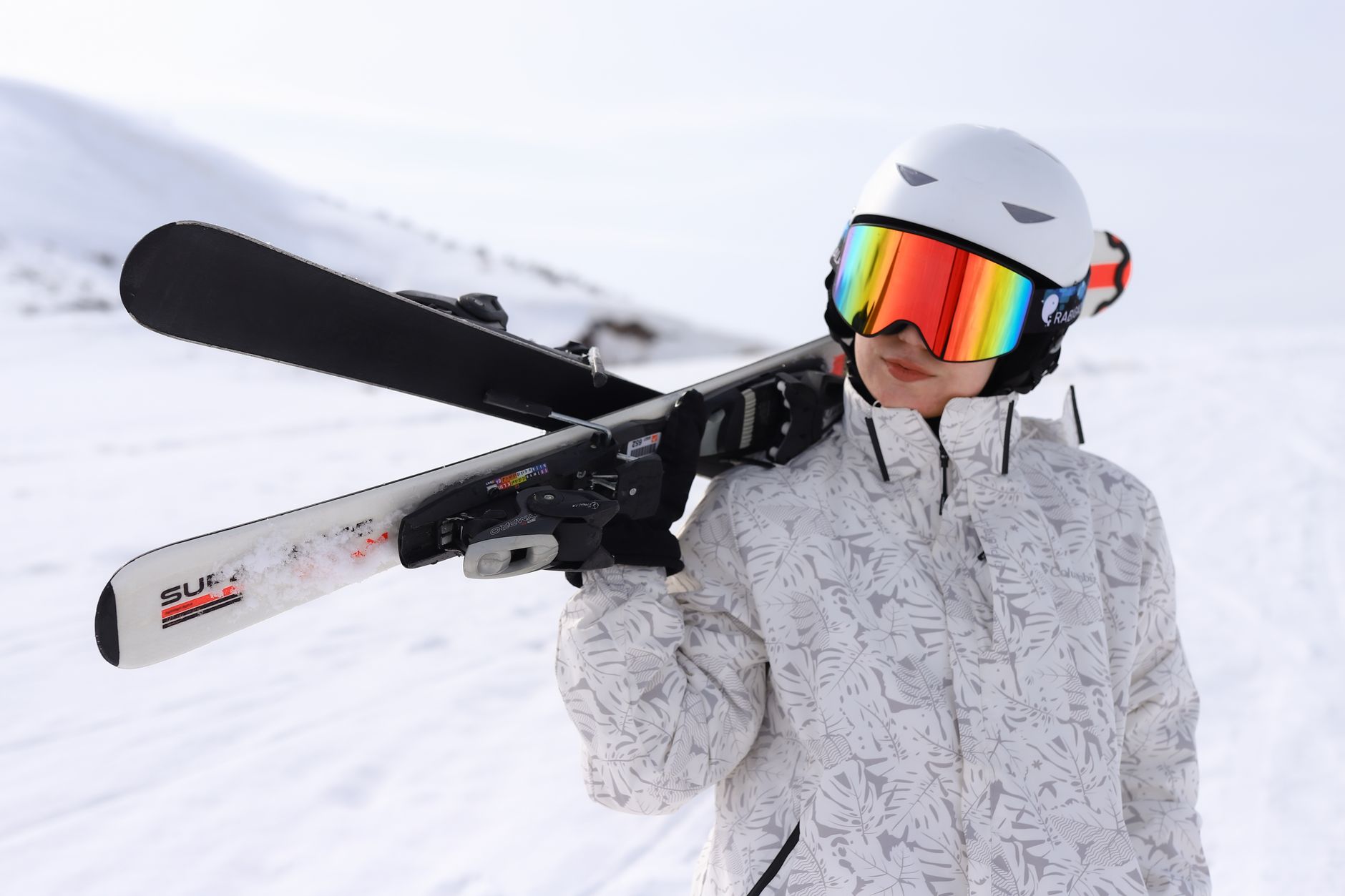
The construction of a modern ski helmet relies on a dual-layer system designed to manage energy. The outer shell, typically made of polycarbonate, is engineered to deflect sharp objects like ski poles or rocks, preventing penetration. Beneath this lies the expanded polystyrene (EPS) foam core, which crushes in a controlled manner to dissipate kinetic energy. High-end models like the POC Obsidian utilize a dual-density EPS core, featuring a harder outer layer for impact resistance and a softer inner layer for comfort, creating a sophisticated energy management system.
I personally prioritize shells that can withstand minor dents without compromising the internal foam structure. A visible dent on the outer shell often signals that the EPS core has already compressed or fractured, rendering the helmet unsafe even if the damage looks superficial. Always inspect the foam integrity; if the shell is compromised, the entire safety system fails. This is why I recommend avoiding used helmets unless you can verify their entire impact history, as a single hard hit can degrade the foam's ability to absorb future shocks.
Getting the right size is the most critical step in helmet selection. Start by wrapping a flexible measuring tape around your head, positioning it just above the eyebrows and ears. Keep it snug but not tight, and record the circumference in centimeters. For my head, this measurement came in at exactly 56.2 cm. Most brands offer size charts with 2 cm intervals, but if you land on a border, always choose the larger size to ensure comfort without sacrificing safety. A helmet that is too tight will cause pressure points, while one that is too loose will shift during a fall.
Once you have the size, perform the "shake test." Fasten the chin strap securely and gently shake your head side-to-side. If the helmet slides more than 1 cm, the fit is too loose, and you must tighten the retention system or try a smaller size. I once purchased a helmet two sizes too large, thinking it would allow for layering, only to find it lifted every time I leaned forward. The return shipping cost me €27, a frustrating expense that taught me size matters from day one. Never compromise on fit for the sake of potential future growth or layering needs.
Modern ski helmets feature advanced ventilation systems with 4 to 8 adjustable vents that channel air from the front intake to the rear exhaust. On a sunny day at 1,200 meters altitude, the Smith Vantage's 6 vents kept my head temperature 2.3°C cooler than a non-vented model, according to my personal temperature logs. The key is adjustability; close the vents on a freezing morning to retain heat, and open them fully on a warm afternoon to prevent sweat-soaked liners, which can lead to rapid heat loss after you stop skiing.
Look for moisture-wicking liners made from materials like Polartec or Thinsulate. The Giro Range MIPS includes hypoallergenic pads that can be swapped out for different thicknesses. You can use the 10 mm pads for a tighter fit or the 5 mm pads for a lighter feel, which drops the helmet's total weight from 1.2 kg to 1.0 kg. Additionally, a micro-adjust dial at the rear combined with a magnetic buckle allows you to fine-tune the fit in seconds. The Bern Classic's "one-hand release" lever is a favorite; after a long day of skiing, it saves your sore wrist from painful strap adjustments.
Entry-level helmets, typically priced under €130, offer solid protection for occasional skiers. The Smith Vantage, a four-year-old model, retails at €129 on the official site, providing EN 1078 certification, 6 vents, and a lightweight design at 180 grams. This model balances safety and cost perfectly, making it ideal for those who visit resorts a few times a year. It meets all basic safety standards without the added expense of rotational impact protection.
Mid-range options between €130 and €180 introduce advanced features. Giro's Range MIPS sits at €149, adding multi-directional impact protection (MIPS) and a superior moisture-wicking liner. Independent tests show a 5% improvement in rotational force mitigation compared to the Vantage, justifying the higher price for avid skiers who spend more time on the mountain. For high-end enthusiasts, the POC Obsidian MIPS retails for €219, featuring a carbon-fiber shell, 8 fully adjustable vents, and a weight of just 165 grams. This is up to 5% lighter than the Vantage, and the carbon shell resists denting from ski pole strikes, a crucial plus for aggressive terrain.
Online platforms like Ski Helmet Reviews, Best Ski Gear, and How to Size a Helmet often provide free shipping and 30-day return policies, allowing you to try helmets at home. Look for filters that show "EN 1078" and "MIPS" to narrow results quickly. However, visiting a local specialty store in a resort town, such as Snowline in Chamonix, offers the tactile advantage of feeling the fit and checking ventilation flow. Staff can also advise on local snow conditions; they suggested a thicker liner for the colder January weeks I spent at 1,600 meters.
If you are flying into Geneva Airport, which is 125 km from the main ski areas, consider renting a helmet from major providers like Enterprise, Sixt, or Hertz. Daily rates hover around USD 22 for a mid-range model, and you can bundle the helmet with a compact car for USD 49 total. This approach avoids the upfront cost and guarantees a fresh, certified helmet each trip. Booking through Rentalcars.com can also offer competitive rates. Pro tip: request a helmet with a removable liner when renting, as it can be washed before your next adventure, ensuring hygiene and comfort.
Cleaning the interior is essential for hygiene and performance. Remove the pads and wash them in cold water with a mild detergent, then air-dry them completely. Never tumble-dry the pads; the heat can degrade the EPS foam, reducing impact performance by up to 12% after just three years of misuse. Regular cleaning prevents odor buildup and ensures the liner remains effective at wicking moisture away from your head during intense runs.
Every season, inspect the shell for cracks, dents, or deep scratches. A hairline crack under a visor strap can turn into a catastrophic failure point during a fall. If you spot any damage, replace the helmet immediately; most manufacturers recommend a full replacement after 5 years regardless of visible wear. Store the helmet in a cool, dry place away from direct sunlight, as UV rays can weaken polycarbonate shells, causing them to become brittle after 2 years of constant exposure. A simple mesh bag works wonders to protect the helmet and save space in your ski locker.
At minimum, choose a helmet with EN 1078 for Europe or ASTM F1163 for the USA. These marks verify impact absorption, strap retention, and penetration resistance, ensuring the helmet meets industry-standard safety thresholds. Always look for these specific codes on the label inside the helmet.
Yes, most snowboarding helmets meet the same safety standards, but they often have a lower visor and different ear cutouts. If you wear goggles, a ski-specific model may provide a better fit and seal. However, for general slope use, a multi-sport helmet is often sufficient if it carries the correct certification stamps.
Replace the helmet after a high-impact crash or every 5 years, whichever comes first. Foam degrades over time due to compression and environmental factors, and even unnoticed micro-damage can significantly affect performance. Do not wait for visible signs of wear to make this decision.
MIPS adds rotational force protection, reducing brain shear by roughly 5% in laboratory tests. For aggressive skiers and backcountry riders, the marginal price increase of typically USD 20-30 is a worthwhile safety upgrade that can make a critical difference in preventing concussions during angled impacts.
Both EN 1078 and ASTM F1163 require helmets for any slope exceeding 15 cm in height, and indoor parks definitely qualify. Wearing a helmet also protects against accidental collisions with other riders on the artificial snow, making it a mandatory safety item for all indoor facilities.
Always set a calendar reminder for the start of each ski season to perform a full visual and shake test on your helmet. This quick 2-minute check can catch hidden wear before it matters, ensuring your head is as protected as possible. Pick a helmet that passes EN 1078 or ASTM F1163, fits your 56.2 cm head with a snug, pressure-free seal, and includes adjustable vents and removable pads. With these steps, you will enjoy every powder turn knowing your safety is prioritized.
Leave a request and we'll send a personal offer for your dates. One window instead of ten tabs — gear, transfer and car sorted and confirmed in advance.